
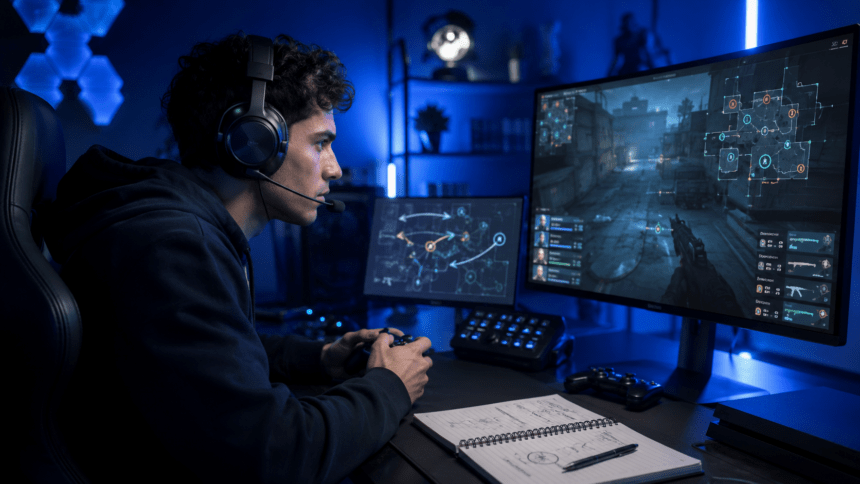
The reflex myth reduces competitive play to a single test: see a cue, press a button, win the exchange. Fast reactions matter, yet they sit inside a wider set of skills that includes reading situations, selecting an action under time pressure, adapting to an opponent, and holding attention through a match. The misconception persists because reflexes are visible, while the decisions that create favourable moments are easier to miss. Strong ranked play therefore asks for more than a quick hand.
That wider view can shape preparation away from chasing a single mechanical score. A player buying a Razer gift card online can treat the purchase as one small practical step, then put the real focus on a purposeful session. Region and platform checks keep the choice aligned with the intended service.
The skills behind a faster-looking game
Digital gift cards work by sending a redeemable code that the buyer or recipient enters on the relevant platform or service. For preparation purchases, Eneba offers a strong option with quick access to digital choices, while its product pages show region and platform information.
Long hours are another popular myth. Deliberate practice is important, but it does not account for every performance difference: a cross-domain meta-analysis found it explained 26% of performance variance in games. A better practice block has a defined target and uses review or feedback to identify the next adjustment rather than simply extending session time. A targeted drill can isolate a recurring decision point and reveal a missed cue.
Pressure turns attention into a competitive skill
Mechanically capable players can still struggle when the stakes feel high. Sport psychology research links choking under pressure with distraction and excessive self-focused attention, which can interrupt the execution of well-learned skills. In ranked matches and tournaments, attention spent policing every mistake can displace attention needed for the current situation. The issue is not a lack of knowledge; focus has shifted away from the task.
Mindset is most useful as a performance process, not as a promise of automatic gains. After a session, identify a controllable error and review the decision behind it. Test one specific adjustment next time. This turns vague frustration into an observable task for the following session. Growth-mindset research in education supports caution: positive beliefs alone do not justify claims of major guaranteed improvement in esports.
Recovery belongs in the same measured conversation. Sleep restriction is associated with slower reaction time and attention lapses, alongside reduced vigilance and impaired executive functioning, all relevant to demanding play. Yet esports findings are mixed: a sleep intervention improved some sleep measures without significant cognitive-performance gains, and one Rocket League experiment did not find a changed in-game outcome after total sleep deprivation. Recovery supports preparation, but it does not provide a guaranteed result.
Genre matters as well. Research on esports cognition points to domains like visual attention, decision-making, adaptation, working memory, and sensorimotor coordination, but findings differ by genre and expertise. A lesson drawn from a fast shooter may not transfer directly to another competitive title, where different demands shape performance.
Reflexes remain a valuable component, but they do not settle the myth on their own. Competitive progress rests on decision quality and emotional control, supported by preparation and consistent learning habits. Used as a discovery tool for appropriate digital options, Eneba fits the practical side of preparation while a player’s next improvement comes from focused choices in play.


