


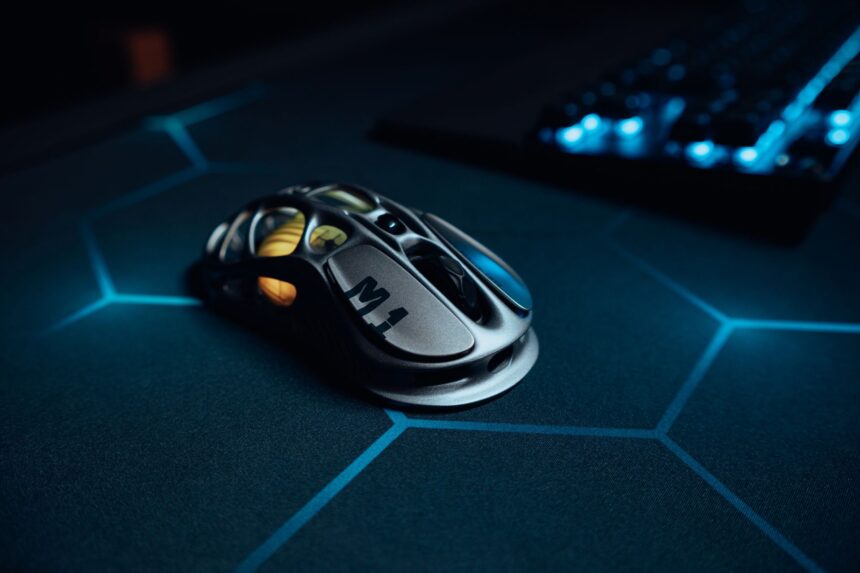
Selecting the right mouse pad can influence in-game performance. Today’s gaming mouse pads are developed with features that support various requirements, whether the focus is on fast movements or stable control. Options such as glass and cloth pads are created to provide consistent tracking and a dependable glide. Understanding the engineering behind these specialized surfaces can help identify which setup suits different play styles and workspace requirements.
Why surface engineering matters in gaming mouse pads
The material beneath a mouse plays a role in both accuracy and comfort. Modern gaming mouse pads are designed to improve sensor tracking, allowing for smooth movement on screen. For instance, glass pads in Wallhack’s collection use materials specifically developed for either speed or control, giving users the ability to select a pad that matches their preferred feel.
Uniformity across the entire surface benefits competitive gameplay. Engineered mouse pads deliver consistent resistance from edge to edge, reducing interruptions during use. This helps maintain steady swipes or quick flicks, supporting precise aiming and rapid response times that can affect match results.
How to choose the right gaming mouse pad for your needs
Choosing a mouse pad depends on the desired playing experience. For those who value quick motions and minimal resistance, glass pads optimized for speed—such as the VA‑005—offer smooth gliding while still retaining enough control to avoid overshooting. For players who prioritize precise stopping power and higher friction, control-oriented models like the CR‑005 may be more appropriate.
Cloth mouse pads remain a common choice, delivering a softer surface that balances glide with grip. They provide comfort during long sessions and work well with most sensors. When considering gaming mousepads, factors such as size for desk coverage, uniform surface texture, and durability should be taken into account, as each contributes to how the pad performs within a given setup.
Supporting different playstyles with purpose-built mouse pads
Individual preferences vary among gamers, so having a range of mouse pad options is useful. Fast glass pads support those who depend on quick flicks or wide swipes—common in shooting games or other fast-paced genres—by minimizing drag and ensuring accurate tracking.
For games where careful aiming is needed, such as strategy titles, mouse pads designed for control offer stable support for slow, deliberate movements. Cloth variants are comfortable over extended periods and maintain reliable glide, making them suitable for versatile use.
Understanding differences between speed- or control-focused designs, as well as hard or soft surfaces, allows users to select a mouse pad aligned with their goals and habits. This makes it possible to choose equipment that fits both skill level and personal preference. Wired connections generally give the lowest latency, while modern 2.4 GHz wireless comes close in practice. Bluetooth is convenient for switching between devices, but it is used less often for competitive play because of higher latency. Comfort matters most during long sessions, so weight, padding and adjustability are worth prioritising. Cloth surfaces offer more control and a softer feel, while hard surfaces reduce friction and favour faster movements.
Electronics sold in the EU carry CE marking, and buyers have a statutory conformity period of at least two years from delivery. Keeping the pad clean matters more than most people expect, since dust and skin oils change how the mouse glides. Firmware updates can improve both features and stability, so it is worth checking whether the manufacturer supports the product over time. Replacing worn parts such as skates or pads is usually far cheaper than replacing the mouse itself. Polling rate describes how often the mouse reports its position, and higher rates give slightly smoother cursor movement at the cost of more CPU usage.


