

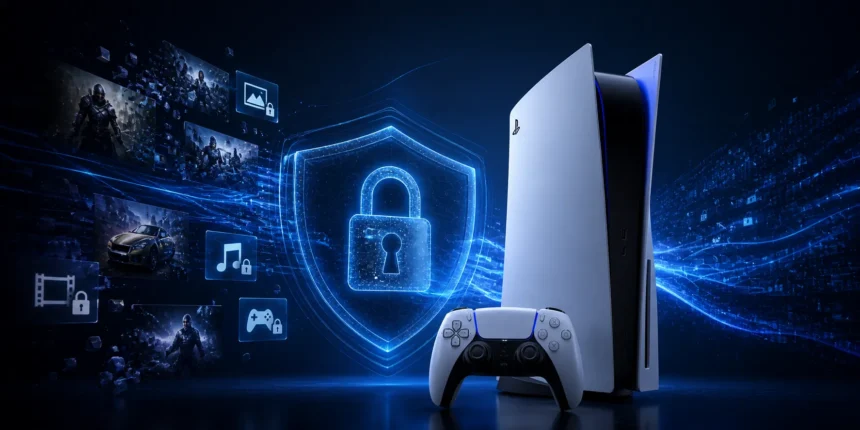
Over the last week, some PS4/5 owners have discovered that they are no longer able to access their digital games without connecting their consoles to the internet once every 30 days. This issue, it seems, is tied to the consoles’ CMOS batteries, and it affects only a subset of newly purchased video games; titles that have been released several years ago still work just fine, according to some people on the internet who have tested this out for themselves.
At first, many assumed that this was just a simple glitch affecting only select users on PS4. However, in recent days, people have started to suspect that this “glitch” is actually a feature that was added by Sony in March’s PlayStation system update. The biggest point in favor of this argument is the fact that there is now a visible timer on the Information page for owned digital games on PlayStation 4 consoles. It’s unlikely that such a feature would appear by mere happenstance, and Sony’s customer support chat bots seem to agree, as well.
Although they’ve provided conflicting answers so far, PlayStation’s support agents have allegedly confirmed to some gamers that this problematic feature is indeed intentional. A few PlayStation fans, however, have done some digging through PlayStation’s backend and claimed that this new DRM is only temporary, as licenses for all digital games seem to become permanent after 14 days. This is currently only a theory, though, since Sony itself has yet to provide an official statement on the ensuing debacle. Whatever the case may be, the evidence is certainly stacked against the company for the time being.
A Move That Contradicts PlayStation’s Identity
Assuming that this issue is being caused by a form of DRM that Sony has implemented, as many have suspected, then this decision of theirs kind of flies in the face of basically everything they have stood for in the past decade. PlayStation is supposed to be the brand for hardcore gamers, what with its consistent slew of high-quality exclusives and strong support for physical media. Heck, the brand’s entire slogan is quite literally “Play Has No Limits.” The last thing one would expect from a company who markets itself with that slogan is a 30-day DRM feature that limits the way that people can play their games. Implementing a mechanic that is so outwardly anti-consumer feels incredibly out of touch in this day and age, almost as if it was ripped straight out of Don Mattrick’s playbook.
Matrick, for those who don’t know, was the head of Xbox (or, more accurately, the president of Microsoft’s Interactive Entertainment Business) between 2010 to 2013. He oversaw the creation of the Xbox 360’s much-maligned Kinect and, more importantly, the launch of the Xbox One. As many seasoned gamers may know, the Xbox One wasn’t exactly a critical darling when it was first announced. Microsoft’s eighth-generation system was lambasted by both journalists and fans for some of the policies that were proposed upon its unveiling. Not only did Microsoft intend to require users to keep their Kinect connected at all times in order to use the console, it also planned to make game sharing much more difficult by introducing a controversial form of DRM.
The Xbox One DRM Debacle Revisited
Microsoft originally planned to make it so that all games, including those purchased physically, would be tied to one’s Xbox account. Users would be able to access the games that they bought from any Xbox One console around the world and play them without installing their discs. While that may have sounded good to some at first, the way that this was going to work made things considerably more annoying rather than convenient.
For starters, the Xbox One was not going to support used games; at least, not in the traditional sense. Physical games could only be traded or sold if a publisher allowed it, and this would be offered exclusively at certain retailers. In other words, if you were someone who lived in a country that didn’t have any of these stores, you were basically out of luck when it came to used games.
It wasn’t just physical game fans who were being screwed over with Xbox’s DRM plans, digital gamers were, as well. In order to synchronize game licenses across devices, Microsoft planned to require all Xbox One owners to connect to the internet once every 24 hours. If they did not do so, then they simply wouldn’t be able to play any of their games. Microsoft eventually walked back both this and all the other absurd requirements for the Xbox One prior to its launch, but the damage to the brand had already been done, and Xbox hasn’t really been able to recover ever since.
Is History Repeating Itself?
This always-online aspect of Microsoft’s disastrous Xbox One plans seems uncomfortably close to the 30-day DRM feature that Sony has seemingly implemented into its PlayStation consoles. Back in 2013, Sony infamously mocked Microsoft’s planned DRM policies with its “this is how you share games” E3 video. Rewatching that video now may leave a sour taste in a lot of PlayStation players’ mouths, given what the company is currently doing. Hopefully, for the sake of gamers and game preservation, Sony will consider walking back its DRM plans, just as Microsoft did all those years ago.


